News articles

  • Milestone Celebrates Vital Conservation Work

    Just over ten years of partnership work has resulted in peat restoration equivalent to the size of 1000 football pitches in this special area.

    The Forest of Bowland is known for its wide-open spaces and upland landscape, much of which is made up of heather moorland and blanket bog. A type of peatland, blanket bog is considered internationally important, and the Bowland Fells support the largest extent of this habitat in Lancashire.

    Forest of Bowland National Landscape Manager, Elliott Lorimer, said, "£2.5 million has been spent on peat restoration in Bowland since 2010, helping to restore 755 hectares of blanket bog.  That's all thanks to the project funders, moorland owners and partners, including the Environment Agency, Natural England, United Utilities, Yorkshire Peat Partnership, Lancashire Wildlife Trust, Ribble Rivers Trust and of course, the contractors and volunteers who have made the work happen on the ground."

    The remoteness of the uplands means that many people are unfamiliar with this very special habitat and the advantages a healthy blanket bog provides.    Sarah Robinson, Farming & Wildlife Officer with the Forest of Bowland National Landscape Partnership explained, "Peat is made up of partly decomposed organic material which builds up in waterlogged, acidic conditions and takes thousands of years to form. It offers us so many benefits: from its intrinsic worth and landscape value to biodiversity, flood risk management and improvements in water quality. It's also vital for carbon storage."

    Over the decades, peatlands have been damaged through a number of factors including atmospheric pollution, drainage, wildfires, grazing, trampling and the effects of climate. Work carried out in Bowland aims to initially stabilise the peat, preventing further loss, and then restore it to the point where it can begin to capture carbon once again. 

    No two peat sites are the same, which means that restoration techniques vary from place to place across the National Landscape, but three main principles apply – control peat erosion, manage hydrology and re-instate vegetation cover. 

    This specialist work involves expert contractors who access the fells between September and March. Working in such exposed locations during the winter months can be challenging and the conditions are often less than easy. Andy Barnes from Terra Firma Environmental Ltd said "By investing in specially adapted machinery and developing our expertise in working in these unique upland environments we have been privileged to work closely with the  National Landscape ,estate and land managers to help them achieve their restoration vision over the last 10 years. Working in a defined geographical area such as the Bowland Fells  means that we are often working adjacent to sites that we have restored during the early years of the programme and watching the improvements develop in the hydrological and environmental condition on the restored areas is hugely satisfying for us as a team."

    To date, work has been carried out on 18 fells covering land within each of the National Landscape's three main river catchments of the Lune, Wyre and Ribble.

    Mallowdale, above the River Roeburn in the Lune valley, forms part of the Bowland Fells Site of Special Scientific Interest (SSSI). Here, restoration work has been carried out sensitively over a number of years so as to avoid disturbance to ground nesting birds such as the lesser black backed gull. Emphasis has been on restoring the intrinsic biodiversity value of the site by rewetting the peat and restoring the blanket bog and heather moorland vegetation. Ultimately this will increase the habitat available for upland species such as fox moths, sky larks and green hairstreak butterflies.

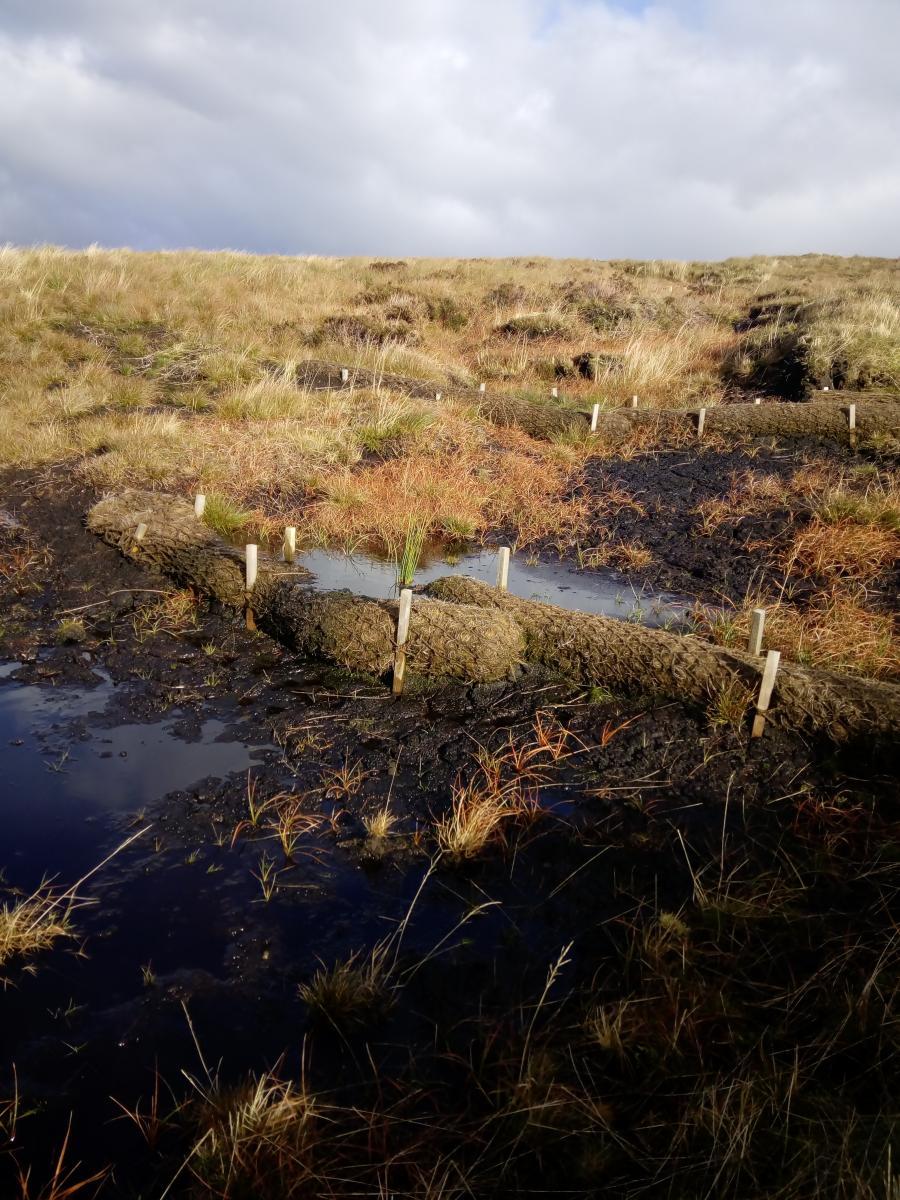
    Coir logs on Mallowdale

    Work in the Wyre catchment has focused on the headwaters at the top of the catchment, with natural flood management very much in mind. Blanket bogs act like sponges during and after high rainfall events. As sphagnum mosses can absorb ten times their weight in water, they hold onto the rainwater and let go of it gradually over time, slowing the flow of water off the fells and helping to reduce flashy flood risk downstream. Re-profiling steep sided peat gullies and installing coir logs, which build up sediment behind them, all helps blanket bog vegetation to re-establish, improving the water absorbing capacity of the fells.

    Work on Pendle Hill in the Ribble catchment has been carried out as part of the four-year National Lottery Heritage Fund Landscape Partnership project. The summit of this iconic landmark has long been a popular spot and is visited by thousands each year.  Over time the vegetation on the hill has been eroded which has resulted in damage to the underlying peat. Director of Conservefor, Gareth Evans, explained, "Working closely with the National Landscape staff our dedicated team work hard through the winter months helping to protect and restore these fragile upland habitats for the future’’.

    Restoration work has included the construction of scores of timber, coir and stone dams designed to hold water in place, along with path improvements and revegetation with heather brash, sphagnum mosses and cotton grass plugs. "Much of the original brash was washed away in the storms of 2020", said Sarah Robinson, "so we've had to go back and construct more dams to slow the speed of water during storm events and add geotextile as a type of carpet to protect the bare peat.  It just goes to show how extreme the conditions on top of the hill can be sometimes."

    The Pendle Hill LP team have developed a special "Peat Freaks" walking route which explains all about the work on the hill.  The self-guided trail starts at the trig point on the summit and can be downloaded via the Viewranger link: https://my.viewranger.com/route/details/MzUxOTQyMA%3D%3D

    For further information about Bowland's Peatland Restoration visit: https://www.forestofbowland.com/peatland-restoration 

  • Visiting Bowland

    Update on 14th June 2021

    On 14th June Prime Minister, Boris Johnson was joined by Chief Medical Officer for England, Chris Whitty, and Chief Scientific Adviser, Patrick Vallance, at a press briefing.

    As not all of four tests for proceeding to step 4 in the UK Government roadmap have been met, step 4 openings will be delayed until July 19th, with the exception of weddings and wakes of more than 30 guests which still can go ahead with social distancing.


    The situation will be monitored daily and if after 2 weeks, the risk looks like it has diminished, it would be possible to move to step 4 earlier. 


    View the Prime Minister's statement and the slides and dataset from the briefing.


    The guidance on what you can and cannot do in England has been updated with a summary on changes from 21 June, including more information on weddings, civil partnerships and commemorative events. 

    Please continue to follow guidance as stated on 10th May below.


    In his statement on the 10th May, the Prime Minister, Boris Johnson confirmed that from Monday 17 May, England will move to step 3 of its roadmap.

    The what you can and cannot do guidance for England has been updated with measures that will change from 17 May including:

    • Gathering limits will be eased. Outdoor gatherings will be limited to 30 people and indoor gatherings will be limited to 6 people or 2 households (each household can include a support bubble, if eligible).
    • Indoor entertainment and attractions will be permitted to open with COVID-secure measures in place including cinemas, theatres, concert halls, bowling alleys, casinos, amusement arcades, museums and children’s indoor play areas.
    • People will be able to attend indoor and outdoor events, including live performances, sporting events and business events. Attendance at these events will be capped according to venue type, and attendees should follow the COVID-secure measures set out by those venues.
    • Indoor hospitality venues such as restaurants, pubs, bars and cafes can reopen.
    • Organised indoor sport will be able to take place for all (this includes gym classes).
    • All holiday accommodation will be open (including hotels and B&Bs). This can be used by groups of up to 6 or 2 households (each household can include a support bubble, if eligible).
    • New guidance on meeting friends and family will emphasise personal responsibility rather than government rules.

    It is welcome news that we can all start to spend more time enjoying our beautiful National Landscapes once again, but whilst visiting the Forest of Bowland please continue to stay safe and consider the following:

    • Know the Countryside Code (64) - Plan ahead, take a map and exercise within your limitations to keep pressure off local resources.

    • Avoid hotspots and busy spots – if you arrive at a place that is already busy and car parks are full, please find an alternative. For ideas of short-breaks covering the whole of the National Landscape take a look at our area-based itineraries: https://www.forestofbowland.com/discover-bowland-itineraries
    • Our farmers have been working hard to maintain food supplies during the pandemic. Support them and our communities by leaving gates as you find them, sticking to the path and keeping dogs on the lead (Note: If you are with a dog and cattle chase you, it is safer to let go of your dog's lead).
    • Strictly no BBQs or open fires, due to the danger of wildfire.
    • Leave no trace. Please take all your litter home.
    • Respect the plant and wildlife which has thrived during lockdown.
    • Travel sustainably - If you can, journey on foot or bike; This means you experience the wonderful scenery of the National Landscape en-route and you don’t have to worry about finding a car parking space.
    • Support local - Take a look at the businesses featured on the Discover Bowland website who are all members of the Forest of Bowland Sustainable Tourism Network.  
    • Stay at home if you, or anyone in your household or support bubble, have symptoms of COVID-19 and keep to the isolation guidance issued by government.  Continue to take hygiene precautions when you are outside and wash your hands as soon as you are back indoors.
    • Be kind and respect one another.

    A new, refreshed Countryside Code was launched on 1st April by Natural England and Natural Resources Wales, coinciding with the 70th anniversary of the creation of the founding booklet.  With more people enjoying the outdoors than ever before, the code was revised to help people enjoy the countryside in a safe and respectful way.  You can view the new revised version here https://www.gov.uk/government/publications/the-countryside-code or refer to our local guidance above.

    Respect, Protect, Enjoy!

  • A Field Full of Poems for National Meadows Day

    NATIONAL MEADOWS DAY POETRY WORKSHOP

    Thursday 10th June - part 1

    Tuesday 15th June - part 2

    7pm - 8.30pm (both sessions)


    Does the sight of a summer meadow bright with wildflowers inspire you to put pen to paper? Celebrate Lancashire's Coronation Meadows with us by joining our poetry walk-and-workshop and your poem might be chosen to be shared on our website and social media for National Meadows Day in July.

    Part 1: The first session will include writing activities (so have pen/pencil and paper to hand), with supporting information and visual material on the meadows and discussion of exemplar poems. It will conclude with a question-and-answer session with guest poet Philip Burton, based on a selection of poems from his new collection, Gaia Warnings.

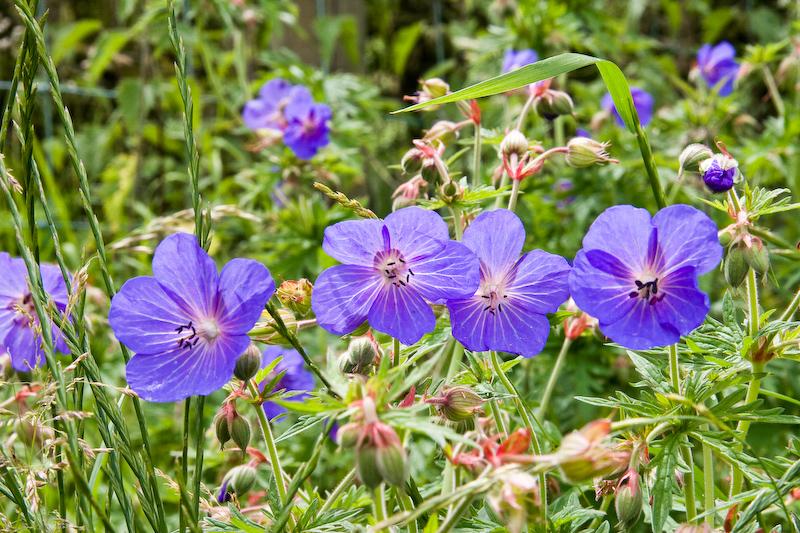
    Meadow Cranesbill by Graham Cooper

    Part 2: The second session – after a few days for you to draft your poem(s) – will be an opportunity to discuss your drafts, and to get peer feedback if you choose to read your poem to us. Following this session, you will have a few days to finalise your poem(s), for submission to the Forest of Bowland National Landscape by midnight on Sunday 20 June for possible use on our website and social media for National Meadows Day.

    This online workshop over two evenings will follow a Covid-compliant guided walk through the species-rich meadows at Bell Sykes Farm in Slaidburn on the morning of Thursday 3rd June. For more information about the walk please see our full Festival Bowland programme here. Please note: if you are unable to attend the guided walk you are still welcome to apply for a place on these online sessions.

    The event is free, but booking is essential. For further information and to book a place please email sandra.silk@lancashire.gov.uk


  • How Bowland's Rural Businesses Built Back Better

    Rural businesses in the Forest of Bowland will soon be ready to welcome visitors back to Bowland as demand for domestic ‘staycation’ holidays in the countryside looks set to rocket.

    As the Forest of Bowland National Landscape launches its 2021 ‘Discover Bowland’ Guide, members of the National Landscape’s Sustainable Tourism Network are gearing up for a busy year.

    As well as offering practical advice and information on making the most of their holidays and short breaks in Bowland, the Discover Guide also tells the stories of how a number of local businesses reinvented themselves during last year’s lockdown.

    These positive ‘lockdown diaries’ include:

    • Courtyard Dairy, which pivoted to online tastings and nationwide delivery to replace some of the business lost during the closure of the hospitality industry
    • Slaidburn Central Stores, which became a community groceries hub and essential lifeline for outlying communities
    • Bowland e-bikes, which accelerated its growth plans as demand for eco-friendly electric bikes rocketed as lockdown lifted

    The 112-page guide also includes a series of five detailed short break itineraries and useful information on accommodation, hospitality, events and outdoor activity providers.

    Publication of the Discover Bowland guide is partially funded by continuing support from the members of the Sustainable Tourism Network who advertise within it. The guide accompanies the launch of the Discover Bowland website last September – funded by the National Landscape and Champion Bowland, a local charity which provides small grants for environment and community projects in the National Landscape.

    The National Landscape and Champion Bowland provided the seed capital to launch the site:  www.discoverbowland.uk with future funding to come from rural businesses who have signed up to participate.

    The website is designed to promote the opportunities of a 300 square mile rural oasis and to showcase the lesser known hidden gems of the National Landscape. A deep well of original content includes information on accommodation, outdoor activities, courses and experiences and the Forest of Bowland’s outstanding food and drink offer.

    Both the guide and the destination website launch with a deliberate focus on bringing in bookings for the 2021 season and extending the season into the autumn and winter months.

    Rural accommodation providers were hit hard by last year’s restrictions, but this year, many visitors are expected to seek fresh air and plenty of outdoor activities on UK staycations in rural settings.

    Forest of Bowland National Landscape sustainable tourism officer Hetty Byrne said:

    “2020 was a very challenging year for the rural economy, but we’ve been encouraged and inspired by the resilience and innovation shown by rural businesses in the Forest of Bowland and their determination to welcome tourists back when restrictions are lifted.

    “Many of these enterprising small businesses really stepped up to support their local communities and have been busy preparing to welcome back visitors with even better facilities this year.

    “We hope the Discover Guide and the new website will significantly increase awareness of Bowland and inspire visitors to stay longer and – ideally – spend more money with local businesses to do their bit to help the rural economy recover.”

    Visit www.discoverbowland.co.uk to plan your Bowland escape!

    Or to view a copy of the new guide visit: https://www.forestofbowland.com/discover-bowland-guide-2021  

  • Name that Bee!

    Bumblebees are fascinating creatures – and play a key role in producing our food - but sadly, along with other pollinators, their numbers have seen a decline in recent decades.  One way we can help in their conservation is by learning how to identify and record them.

    Why not join the Forest of Bowland National Landscape and Yorkshire Dales Millennium Trust to learn about the bumblebee lifecycle, why they are important and how to recognise the species we find here in Bowland?


    BUMBLEBEES FOR BEGINNERS

    Thursday 6th May

    12noon – 1pm

    Online

    Bumblebees are declining in our countryside, but one important way to help with their conservation is learning how to identify the different species and record what you see for the national records on iRecord.

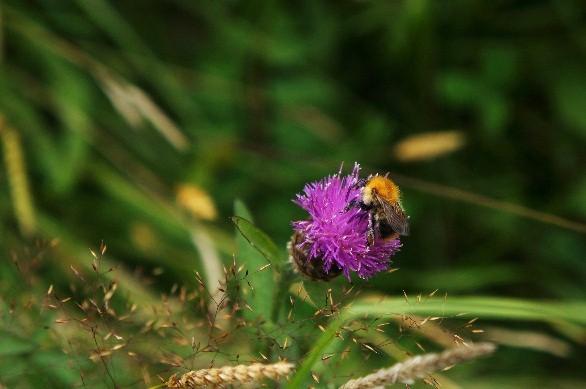
    pascuorum_on_C.nigra_.jpg

    In this Forest of Bowland National Landscape/Yorkshire Dales Millennium Trust workshop you can learn about their lifecycle, why they are important and how to identify our seven more common species.

    Booking essential.  Please contact carol.edmondson@lancashire.gov.uk for more information and to book a place.

    Free, but donations to Champion Bowland welcome via https://www.championbowland.org.uk/


    BUMBLEBEE IDENTIFICATION - INTERMEDIATE LEVEL

    Friday 14th May

    10am - 12 noon

    Online

    This online training session is intended for people who already have a grasp of basic bumblebee identification. The workshop, delivered by Ben Hargreaves from Lancashire Wildlife Trust, will introduce you to identifying the scarcer bumblebees and the cuckoo species.

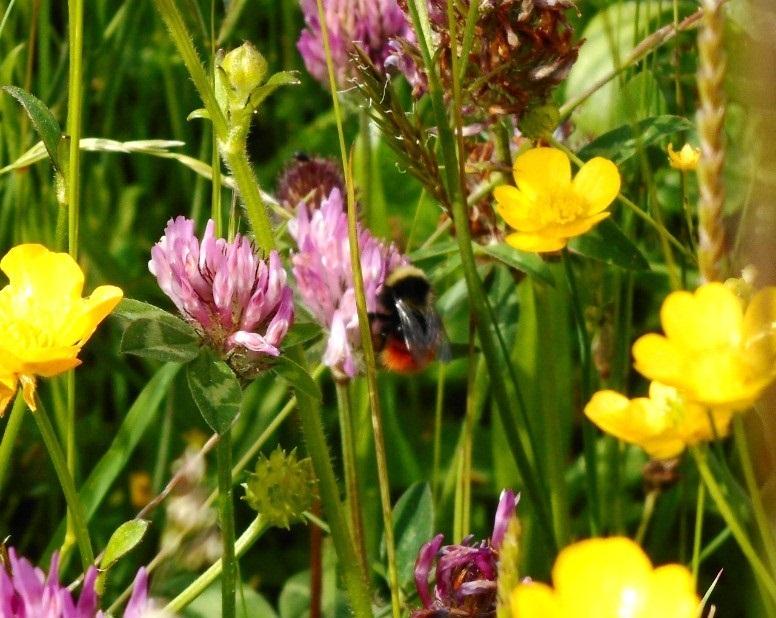
    monticola_on_red_clover_0.jpg

    Booking essential. Please email catherine.mercer@ydmt.org for more information and to book a place.

    Free

  • Visiting the Forest of Bowland National Landscape

    In his statement on the 5th April, the Prime Minister, Boris Johnson confirmed that from Monday 12 April, England will move to step 2 of its roadmap.

    The following are some of the COVID-19 restrictions that will be eased from 12 April:

    (for full details visit: (COVID-19) Coronavirus restrictions: what you can and cannot do - GOV.UK (www.gov.uk)

    • Self-contained accommodation will be able to open for overnight stays in England for people with their household or support bubble
    • Outdoor hospitality venues will be able to reopen, with table service only
    • Most outdoor attractions will be able to reopen
    • Non-essential retail will be able to reopen
    • Personal care premises such as hairdressers and nail salons will be able to reopen
    • Public buildings such as libraries and community centres will be able to reopen
    • Weddings, civil partnership ceremonies, wakes and other commemorative events will be able to take place for up to 15 people

    It is welcome news that we can all start to visit our beautiful National Landscapes once again, but whilst enjoying more time in the Forest of Bowland please continue to stay safe and consider the following:

    • Know the Countryside Code - Plan ahead, take a map and exercise within your limitations to keep pressure off local resources.

    • Avoid hotspots and busy spots – if you arrive at a place that is already busy and car parks are full, please find an alternative. For ideas of short-breaks covering the whole of the National Landscape take a look at our area-based itineraries: https://www.forestofbowland.com/discover-bowland-itineraries
    • Our farmers have been working hard to maintain food supplies during the pandemic. Support them and our communities by leaving gates as you find them, sticking to the path and keeping dogs on the lead (Note: If you are with a dog and cattle chase you, it is safer to let go of your dog's lead).
    • Strictly no BBQs or open fires, due to the danger of wildfire.
    • Leave no trace. Please take all your litter home.
    • Respect the plant and wildlife which has thrived during lockdown.
    • Travel sustainably - If you can, journey on foot or bike; This means you experience the wonderful scenery of the National Landscape en-route and you don’t have to worry about finding a car parking space.
    • Support local - eateries continue to provide takeaway services and if space allows, some outdoor hospitality venues will be able to reopen.  Take a look at the businesses featured on the Discover Bowland website who are all members of the Forest of Bowland Sustainable Tourism Network.  Be sure that you check ahead to make sure that places are open and what they are offering, in-line with the Government roadmap https://www.gov.uk/government/publications/covid-19-response-spring-2021/covid-19-response-spring-2021-summary
    • Stay at home if you, or anyone in your household or support bubble, have symptoms of COVID-19 and keep to the isolation guidance issued by government.  Continue to take hygiene precautions when you are outside and wash your hands as soon as you are back indoors.
    • Be kind and respect one another.

    A new, refreshed Countryside Code was launched on 1st April by Natural England and Natural Resources Wales, coinciding with the 70th anniversary of the creation of the founding booklet.  With more people enjoying the outdoors than ever before, the code was revised to help people enjoy the countryside in a safe and respectful way.  You can view the new revised version here https://www.gov.uk/government/publications/the-countryside-code or refer to our local guidance above.

    Respect, Protect, Enjoy!

  • Meadow Makers Project

    Following the successful Plantlife bid to the Green Recovery Challenge Fund, and our partnership with Yorkshire Dales Millennium Trust, Bowland Hay Time will be delivered through the 2021 – 2022 Meadow Makers Project.  The countrywide project aims to restore over 500 hectares of species-rich grassland on 100+ sites and will include a nationwide engagement programme connecting 7000 people in local and wider communities to grassland heritage, improving their experiences and wellbeing.    

    Our part in this project is to carry out 25 hectares of meadow restoration work at 11 sites in the Forest of Bowland area. Using a combination of "green hay" and brush harvested seed from our donor meadows, the meadow restoration work in the Forest of Bowland continues into its tenth year.

     The Project also provides funding for a trainee "Meadow Maker", a 6 month traineeship with Plantlife working with our project officer, aimed at encouraging young people into conservation work.

    We will also be running meadow related events, both on site and online, over the course of the project, raising awareness of the work we do in the meadows and why it is so important.

    For further details of the project and funding visit: https://www.ydmt.org/news/partnership-meadows-greenrecovery 

    NEW NOVEMBER 2021: Plantlife: saving wild plants latest film on why meadows matter has just been launched: https://bit.ly/MeadowsMatter 

    Green Recovery Challenge fund logo
  • Crook O’Lune beauty spot gets new lease of life as a wildflower meadow

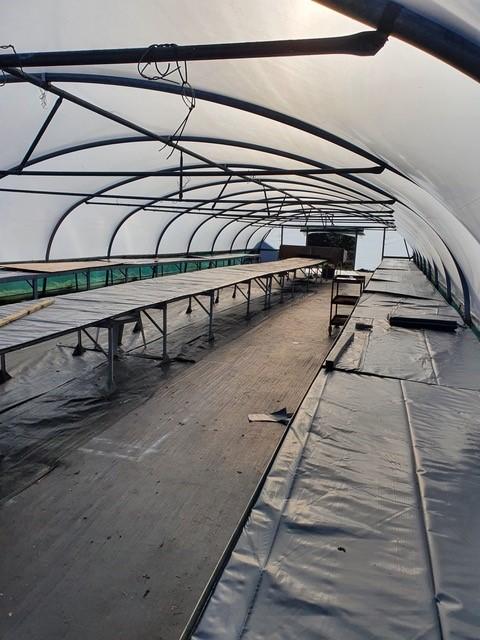
    Polytunnels

    A beauty spot at the Crook O’Lune near Lancaster, known locally as Hermitage Field, is getting a new lease of life as a wildflower meadow.

    A formal 12 year license agreement has been finalised between Lancaster City Council as owner of the site and charitable residents’ group, Hermitage Field Community Meadow. The agreement will allow the group to manage a five acre plot of land in the field on the council’s behalf as a wildflower meadow.

    Hermitage Field already contributes to the area being a popular place to visit, with car park and picnic facilities nearby, as well as stunning views across the Lune Valley.  The remaining two acres at the centre of the field is already being managed under a separate licence by charity ‘Life for a Life’, as a memorial forest.

    The Hermitage Field Community Meadow charity was recently set up by a group of local residents and has already acquired funding to help them create and manage the meadow.  Work has begun on preparing the land before new planting can take place later in the year.  The aim of the project is to develop an attractive and enhanced landscape at the popular site which will complement the new memorial forest.

    The paths running through the site and parallel with the road will be retained and maintained to enable visitors to the Crook O’Lune to enjoy access to the field.

    Councillor Kevin Frea, Cabinet member for climate action and member of Crook O’Lune Advisory Committee, said: “The creation and development of a wildflower meadow at Hermitage Field by local people that are passionate about the conservation of this special place, has provided the council with another perfect opportunity to breathe new life into this treasured beauty spot.

    "As well as looking incredibly attractive and complementing the natural beauty of the memorial forest on the same site, the new arrangement will also have massive ecological benefits.  Introducing pollinating plants and enticing pollinating bees, insects and other wildlife to the site will increase biodiversity as well provide a local seed bank for other potential meadows.”

    “The arrangement also supports the aims of the council’s new grassland management strategy which will see changes to the way grass is cut in local parks and public spaces, again to help increase biodiversity and meet the council’s climate change commitments.”

    The initiative was spearheaded by local resident and trustee of the charity, Erica Sarney who initially set up a group called the Community Pollinator Patches and went on to form the charity with a number of like-minded friends.

    Erica said: "We’re very much looking forward to getting this exciting project off the ground and creating a stunning meadow teeming with wildflowers and wildlife for everyone to enjoy. Local people love this area so much and which is also part of a popular ramble overlooking the Lune Valley towards Ingleborough.

    "We really hope everyone enjoys the meadow and may be inspired to come and join us, when restrictions allow, to help us bring it to life.  For more information and how you can get involved, visit our website at www.hermitagefieldcommunitymeadow.com”

    The charity has secured funding from Plantlife, The Areti Charitable Trust, Halton Lune Hydro Trust, Forest of Bowland National Landscape and Life for a Life Memorial Forests. Part of the site has already been sown with seed from Lancashire's Coronation Meadow at Bell Sykes Farm, Forest of Bowland National Landscape, as well as Gait Barrows Reserve in Silverdale.

    The project will be growing wildflowers with volunteers in polytunnels at the council’s White Lund Depot in Morecambe.


  • From Medieval Monastics to Radicals and Reformers

    The National Landscape is full of fascinating history, not all of it well known to the wider world.  Join us for these Festival Bowland events and find out more!
    Each event is free to attend and will be held online. See individual events for booking details.

    MAINTAINING TRADITIONAL BUILDINGS

    Tuesday 2nd March, 6.30pm – 8.00pm

    Bowland's many traditional farm buildings add to the National Landscape's landscape character and sense of place. Join architect and historic buildings consultant, James Innerdale, as he shares practical ideas and helpful tips on how to care for, and maintain, them.

    James has delivered a number of training sessions on behalf of SPAB (Society for the Protection of Ancient Buildings).

    Booking essential.  For more information and to book a place please email sandra.silk@lancashire.gov.uk or phone 07973 923142


    IN THE FOOTSTEPS OF EXRAORDINARY PEOPLE (FULLY BOOKED)


    Tuesday 23rd March, 6.30pm – 8pm

    Meet the Radicals…  This online event introduces some of the nonconformists, reformers and change makers researched by the volunteers of the Pendle Radicals project.  And it introduces The Radicals Trail, a new way of exploring our rural communities around Pendle Hill.  There must have been something in the air, because radical history is all around us.  You just need to know where to look…  Meet some Pendle Hill people who changed the world! 

    You will encounter the first Quaker, plus a Higham boy who became a beacon of the Enlightenment, the pioneers of the Independent Labour Party, and campaigners for women’s suffrage and for the right to roam.  We’ll tell you about themed Radicals walks and about future plans to grow and extend The Radicals Trail.  

    Pendle Radicals is led by Mid Pennine Arts, and is part of the Pendle Hill programme, supported by National Lottery players through the Heritage Fund.  

    Booking essential. Please book via MPA's Eventbrite page at https://www.eventbrite.co.uk/e/in-the-footsteps-of-extraordinary-people-tickets-141974717201?aff=ebdsoporgprofile

    For more information please email jayne.ashe@lancashire.gov.uk

    Free, but donations to Champion Bowland welcome via https://www.championbowland.org.uk/

    SAWLEY ABBEY: THE BUILDINGS AND PEOPLE OF A MEDIEVAL MONASTERY (LAST FEW PLACES REMAINING)

    Wednesday 21st April, 6.30pm – 8pm

    Between 1148 and 1537, Sawley Abbey was home to a community of white-clad Cistercian monks. This talk will examine the insights the abbey's ruined buildings provide into the evolution of the monks' way of life over 400 years, and question traditional notions of late medieval decline leading to Henry VIII's Dissolution of the Monasteries. It will also use art and architecture to illuminate the lives of the people who lived, prayed and worked at the abbey between the 12th and 16th centuries. 

    Dr Michael Carter is senior properties historian at English Heritage. He specialises in monastic history, art and architecture and has an especial interest in the Cistercians in northern England. He has published and lectured widely.

    Booking essential.  For more information and to book a place please email sandra.silk@lancashire.gov.uk or phone 07973 923142 


  • Meadow Makers Green Recovery Challenge Fund Trainee Opportunity

    RECRUITMENT PACK: MEADOW MAKERS TRAINEES

    IS THIS YOU?  INSPIRED TO BE THE NEXT GENERATION OF NATURE CONSERVATIONISTS?

    Plantlife and its project partners are seeking six enthusiastic, self-motivated individuals with a strong interest in conservation to become Trainee Meadow Makers and take part in a fully funded trainee programme.  We are particularly interested in hearing from young people keen to develop a career in conservation.

    Six full-time, fully paid (based on the National Living Wage) career entry positions are available.  Each position is for six months, from April to September and will be hosted by Plantlife (x3), Cumbria Wildlife Trust, High Weald National Landscape Partnership and Yorkshire Dales Millennium Trust.  You will work in areas including Herefordshire, Lancashire, Cumbria, Devon & Cornwall and East Sussex. 

    The Meadow Makers project is taking place thanks to funding from the government’s Green Recovery Challenge Fund.  The fund is being delivered by The National Lottery Heritage Fund in partnership with Natural England and the Environment Agency.

    Deadline for receipt of applications Sunday 7th March at 9PM

    Interviews will be held online during the week commencing 15th March.

    About the role:

    Meadow Makers is a new and exciting project, taking place thanks to funding from the government’s Green Recovery Challenge Fund.  The fund is being delivered by The National Lottery Heritage Fund in partnership with Natural England and the Environment Agency.

    Led by Plantlife, it aims to restore species-rich grasslands across England in partnership with Arnside & Silverdale National Landscape, Cumbria Wildlife Trust, Duchy of Cornwall, Herefordshire Meadows, High Weald National Landscape Partnership, Moor Meadows and the Yorkshire Dales Millennium Trust.

    Plantlife is seeking to appoint three Trainee Meadow Makers - one to work across Herefordshire, working alongside Herefordshire Meadows and two to work across Devon/Cornwall, working alongside Moor Meadows and the Duchy of Cornwall.  All three posts will be employed by Plantlife and fully supported by a nominated member of staff.

    The other three opportunities available will be employed by external partners, High Weald National Landscape Partnership, Cumbria Wildlife Trust and Yorkshire Dales Millennium Trust.  To find out more about what each provider is offering, follow the links on the webpage.

    In all cases Trainee Meadow Makers will work alongside expert grasslands project staff to support the delivery of all aspects of the Meadow Makers project.  Each provider will offer a wide range of opportunities for you combining work-place learning and experience, practical action (including conservation and people engagement), peer to peer learning and the completion of a training framework.  There will be an opportunity to focus training to reflect the interest of individual trainees, supported by a personal training budget.

    The training framework will comprise of five units and training will be delivered via a mix of digital remote learning, by Plantlife, by your host project partner and by yourselves.  The five units are as follows:

    1. Understanding an organisation - the organisation you are employed by, who, what, why, how.
    2. Being a responsible colleague - workplace behaviours, values, communication.
    3. A developing professional - training, work placed learning.
    4. Leadership and management - with your employer identify your own ‘mini project’ and take responsibility for all aspects from planning to completion.
    5. Next steps: create your portfolio, diaries, blogs, photos, case studies, videos.


    It is anticipated that there will be an opportunity for all six Trainee Meadow Makers to work together as a team on a project over the full length of the placement.

    Throughout the six months there may also be wider opportunities within project partner organisations and there is potential for a programme of ‘expert’ speakers to be pulled together.

    For more information please visit plantlife's website: www.plantlife.org.uk  You will also find information there about our trustees, our policies and projects, as well as our annual reports and accounts.

    About the job

    This is a full-time post (35 hour week) and is for six months.

    The Plantlife Trainee Meadow Makers will be home based. 

    Frequent travel will be needed within the postholder’s project area (either Herefordshire or Devon/Cornwall) and occasional travel may be necessary to other project areas in England.

    We work normal office hours (9-5, Monday to Friday), although this role will also require some weekend and evening working.  Flexible working is offered.

    The reward package includes being paid the National Living Wage (£8.91 an hour) plus contributions to a group personal pension scheme and other benefits, including up to 12.5 days annual leave plus bank holidays.

    How to apply

    A full job description and person specification are set out below. If you fit the bill, please write explaining why you would like to be considered for this role and please complete a Plantlife application form (available online) and return it to isobel.hall@plantlife.org.uk  by Sunday 7th March at 9PM

    We expect to hold interviews on-line during the week beginning 15th March

    If you have any questions about the role please contact Isobel Hall, the Meadow Makers Project Manager (isobel.hall@plantlife.org.uk or 07960 152687

    In order to minimise our administrative costs, applicants should assume they have been unsuccessful if they have not heard from us within three weeks of the closing date.  In such instances we are thankful for your interest in Plantlife International.