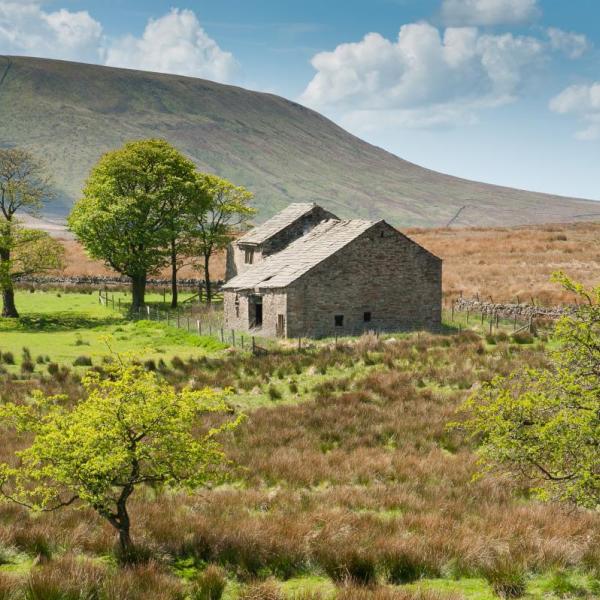
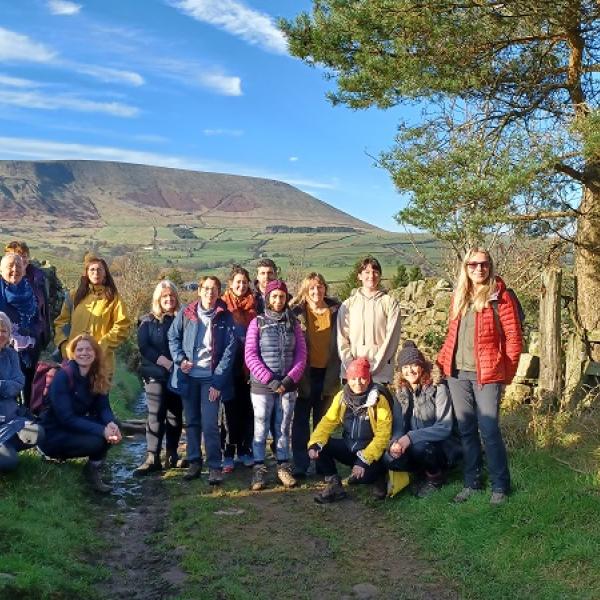
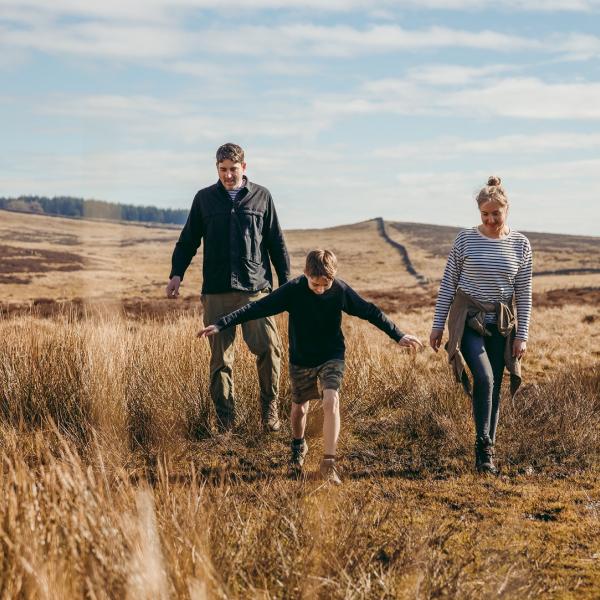
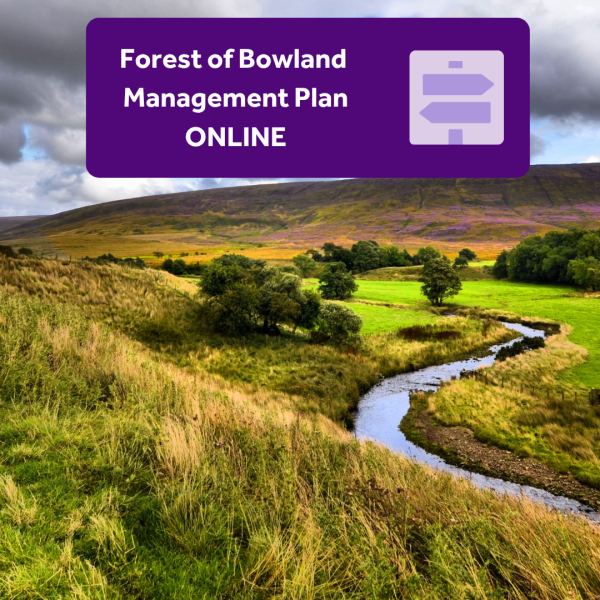
If you find yourself in Bowland in 2040, this is a vision of what it is hoped you will experience. This plan sets out a roadmap to seek to ensure that the landscape, its wildlife and cultural heritage – and its people – reach this point and beyond.
The Forest of Bowland landscape retains its sense of local distinctiveness, notably the wide-open moorland character of the Bowland Fells, undulating lowland farmland, clough woodlands, traditional buildings and the settlement patterns of its villages, hamlets and farmsteads.
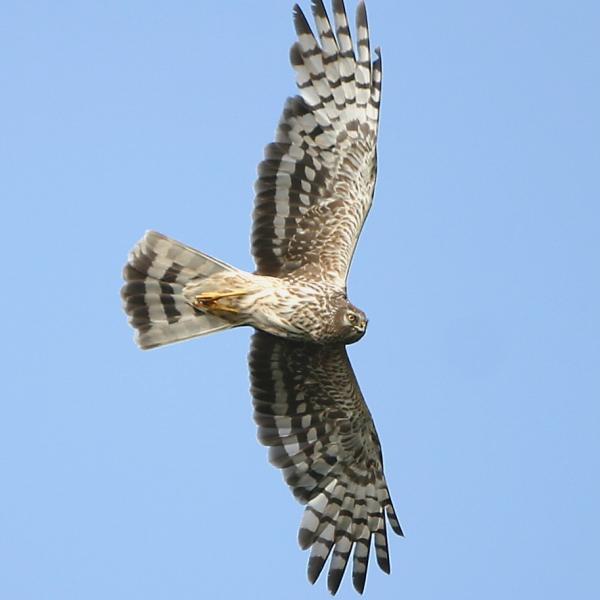
The landscape, and the habitats found here, are of intrinsic value and are adapting to and resilient to the impacts of climate change. They provide services and benefits that people value – carbon storage and sequestration, clean air and water, flood resilience and increased health and well-being. The restoration of our species-rich hay meadows has gathered pace, and they are the equal of anywhere in the English uplands in their beauty, diversity and extent. Our peatlands are restored and managed as wetland ecosystems. Veteran trees are cherished and woodlands are well managed, protected, extended and reconnected as the treescape of the area changes. The names of the rivers Ribble, Hodder, Lune and Wyre are synonymous with clear, naturally flowing wildlife-rich watercourses. Our breeding waders thrive and the decline in our songbirds has reversed; our raptors, including the hen harrier that is so emblematic of Bowland, breed successfully, free from the persecution of the past.
Profitable farming and sustainable moorland management are at the heart of nature recovery and vice versa, and they sustain natural processes and help them to flourish. The partnership-working between farmers, land managers, conservation bodies, communities and businesses is focused on delivering more for nature together.
The rich cultural heritage of the area is known for being well-understood and well-managed. Like our natural heritage, our cultural heritage is helping to support a resilient and sustainable local economy as demonstrated by the presence of vibrant villages with a good provision of local services for all ages. More people, whatever their circumstances, can responsibly enjoy all that Bowland has to offer through an excellent rights of way network and vibrant regenerative tourism sector. Local people are proud to live here, whilst communities from nearby towns like Preston and Colne think of it as their special place to visit close to home.
The Forest of Bowland is nationally regarded as a truly outstanding landscape, where it can clearly be demonstrated that the partnerships that have been developed to support nature, climate, people and place are bringing benefit for everyone.
Ways of Working
This section sets out the ways in which we expect everyone to work when delivering this management plan. The ways of working form a framework to guide good practice in Bowland, promoting ecological integrity, community well-being and economic sustainability.
- Farming and sustainable land management:
Recognise that farmers and land managers play the key role in conserving and enhancing the natural beauty of Bowland. Supporting nature-friendly farming and sustainable moorland management which is critical for the long-term health of the area and its communities.
- Focus on outcomes, not prescriptions:
Emphasise results over a standardised, prescriptive approach, especially in agri-environment schemes and other work on the farmed landscape. Except with our most prized natural assets, there should be a greater openness to risk and a greater embracing of ambition.
- Collaboration and partnerships:
Building meaningful partnerships between farmers, land managers, conservation bodies, Government arms length bodies (ALBs), local authorities, and residents is essential for ensuring a thriving future for nature and heritage. Establishing consensus, though time-consuming, adds value to limited resources and enhances the effectiveness of conservation efforts. Readers and users of this plan should assume that a partnership approach is central to achieving its outcomes, be it policy / strategy development or practical work on the ground.
- Reversing declines in upland nature through landscape-scale ecological networks:
It is essential to adopt an integrated, whole-landscape approach to nature recovery, that connects habitats, making them larger, better-managed, and more numerous, with collaboration extending to surrounding areas for broader ecological impact. The LNRSs for Lancashire and York & North Yorkshire provide excellent evidence, ecological mapping and guidance for habitat creation, management and species specific support that should be followed by partners. Some species (e.g. raptors) and habitats (e.g. hay meadows, trees and woodlands and peatlands) will need targeted interventions to reverse biodiversity loss or to ensure gains of the recent past are maintained.
- Adapting to a changing climate:
There should be a strong focus on nature-based solutions to adapting to the impacts of a changing climate. There is an important role for farming and land management to play here, whilst this sector too needs support to adapt some of its practices.
- Ecosystem services and benefits:
Landscape and biodiversity has intrinsic value. It is also necessary to understand, promote and safeguard the services and associated benefits that the landscape provides, including vital water filtration, flood mitigation, carbon storage and health & well-being benefits.
- Managing landscape change:
It must be accepted that landscape change is inevitable but needs careful management to ensure conservation outcomes are provided and maintained. We must all work with the grain of the landscape to reinforce its special qualities, without seeking to freeze it in time. Adaptive management should be incorporated into planning and review processes
- Economy and Environment:
It is important to promote the fact that Bowland’s natural beauty and rich wildlife are valuable economic and social assets. Development within this protected area must be environmentally, economically, and socially sustainable, and the actions of the Relevant Authorities under LURA (see p4) must seek to further the purpose of designation by setting and adhering to planning policy which protects and enhances the National Landscape. Wherever possible job opportunities and services for residents, including public transport, should be generated by any development.
- Integrated Nature and Heritage Conservation:
Conservation efforts should address the full range of environmental assets, including biodiversity, geodiversity, and the historic environment, recognizing the interconnections between these elements in all projects and programmes.
- Balancing benefits:
Actions which are intended as beneficial should not have perverse consequences, e.g. they must not unintentionally bring about one environmental benefit at the expense of another, such as planting trees on important grassland sites or close to known wading bird sites or where it damages nature, heritage and landscape character. The importance of the mitigation hierarchy should also be reinforced wherever necessary to help balance benefits and impacts.
- Using and valuing regulation:
Regulation and the law in general must be followed when delivering land management activity, to ensure its intended benefits for people, places and nature are delivered
- Access for everyone:
Everyone should have the opportunity to responsibly access and enjoy Bowland’s natural beauty. This will need some barriers to be addressed, such as improving access infrastructure, and broadening the ways in which nature and heritage are promoted. In the provision of access infrastructure, the most accessible option should always be used. Not all barriers are physical, and this plan promotes work towards recognising and removing those that may also be cultural and social.
- Engagement and Inclusion:
It is vital that both resident and neighbouring communities to Bowland have the awareness and opportunity to be fully and meaningfully involved in activity and decision making. In some cases, this will involve providing additional support to communities to become engaged. This plan promotes active engagement and inclusion in all areas of work.
- Learning and sharing:
Educational activities should be seen as being integral to conservation management. In all work to conserve and enhance nature and heritage, opportunities should be sought for learning and sharing knowledge, to enhance public engagement with Bowland’s natural beauty.
- Arts and creativity:
For many people, the arts are an ideal gateway to discovering, exploring and enjoying Bowland. This is not necessarily about ‘art’ as objects, important though this can be there is enormous value to be gained from artistic enquiry and community participation as ways to express what people feel about their place and why it matters.
- Gathering and sharing data and evidence:
Decision making should be evidence led and underpinned by good data. There is still a paucity of good and up-to-date data on our biodiversity and heritage, whilst there are also gaps in the evidence base across most areas of conservation activity and social and economic activity in the area. As well as the need to resource data and evidence gathering and interpretation, there is also a need for greater sharing of data (which has often been gathered at public expense) via local records centres (LERN and NEYEDC).
- Sustainable funding and resource allocation:
There is an acknowledgement of the financial challenges for public funding and there should be continued effort to diversify income sources, though there will always be a strong role for public funds to support the provision and maintenance of public goods.
- Good project management:
Partners should follow good project management when planning and delivering actions linked to this Plan. These might include: use of evidence and sharing of data; acquisition of necessary permissions, permits, licences and consents; development of project-level Habitat Regulations Assessments as appropriate; use of surveys to assess needs and opportunities, and of existing ecological and heritage mapping/data; thorough consultation and collaboration with a wide range of groups and organisations; use of local seed, suppliers, materials and labour wherever possible; an assessment of the carbon/GHG impacts of the proposal and any mitigation that can be carried out; good monitoring, evaluation, review and adaptive management processes; and identification of mechanisms for adjusting management where unintended consequences arise
- Reducing conflict:
Given the number of stakeholders now involved in National Landscapes, both resident and visitors, it is important that mechanisms are in place to consider how co-existence between competing interests can be achieved. In all cases we advocate a collaborative approach, and advise reference to the IUCN Guidelines for Human-Wildlife Conflict and Coexistence
The Protected Landscapes Targets and Outcomes Framework (PLTOF)
The PLTOF was introduced by Natural England in 2024 to help identify the contributions that could be made by Protected Landscapes to the Environmental Improvement Plan and to initiatives such as 30 x 30, as has been set out elsewhere in this plan. The PLTOF relates to the Protected Landscapes as places, therefore these are not just targets for the National Landscape and National Park teams themselves. Targets 1, 7 and 8 are apportioned to each Protected Landscape; the others are national targets. The targets will be monitored nationally.
The table below sets out where the Outcomes of this plan, as described in Part 2, contribute to the PLTOF. See also page 75 - Targets and Monitoring - which details Local Indicators for those Outcomes not covered by the PLTOF.
Management Plan Outcomes (2026-2031)
1. The distinctive landscape character of the Forest of Bowland National Landscape is conserved and enhanced
2. All Bowland’s remaining unrestored peatlands are brought under restoration
3. Woodlands, trees and hedgerows are in good ecological condition, supporting a diversity and abundance of key species. Tree and scrub cover is expanding to support nature and enhance the landscape
4. Grasslands are species-rich, safeguarded and extended, and support wider biodiversity
5. Rivers and watercourses are healthy and functioning naturally. New wetland habitats are created, and these and existing wetlands are well-managed: all supporting a greater abundance and diversity of key species
6. Champion Species are increasing in range and abundance
7. The provision of high-quality access infrastructure, facilities and information, means that the Forest of Bowland National Landscape is a welcoming place for everyone
8. More people can enjoy, understand and celebrate the National Landscape's natural beauty and special qualities through the provision of high-quality information, events and activities which inspire them to engage with the area
9. More people are learning about Bowland and its natural beauty, and practising the skills that help to conserve and enhance its characteristic features
10. More people are enjoying the health and well-being benefits that come from a greater connection with Bowland’s nature, culture and landscape
11. The historic environment and cultural heritage of the Forest of Bowland is better understood, conserved, enhanced and celebrated.
12. Bowland is a showcase for regenerative tourism, emphasising the connections between nature, society and culture, while ensuring financial benefits stay within the local community
13. Thriving local communities have access to key services and are actively engaged in activities and projects that conserve, enhance and celebrate the natural and cultural heritage of the National Landscape.
PLTOF Targets linked to the Management Plan Outcomes
| PLTOF Target |
Management Plan Outcome |
| 1 |
2 |
3 |
4 |
5 |
6 |
7 |
8 |
9 |
10 |
11 |
12 |
13 |
|
1 Restore or create more than 250,000 hectares of a range of wildlife-rich habitats within Protected Landscapes, outside protected sites by 2042 (from a 2022 baseline).
Forest of Bowland target – 4700 ha
|
|
√
|
√
|
√
|
√
|
|
|
|
|
|
|
|
|
| 2 Bring 80% of SSSIs within Protected Landscapes into favourable condition by 2042 |
|
√
|
√
|
√
|
√
|
|
|
|
|
|
|
|
|
| 3 For 60% of SSSIs within Protected Landscapes assessed as having ‘actions on track’ to achieve favourable condition by 31 January 2028 |
|
√
|
√
|
√
|
√
|
|
|
|
|
|
|
|
|
| 4 Continuing favourable management of all existing priority habitat already in favourable condition outside of SSSIs (from a 2022 baseline) and increasing to include all newly restored or created habitat through agri-environment schemes by 2042 |
|
√
|
√
|
√
|
√
|
|
|
|
|
|
|
|
|
| 5 Ensure at least 65% to 80% of land managers adopt nature-friendly farming on at least 10% to 15% of their land by 2030 |
|
|
√
|
√
|
√
|
|
|
|
|
|
|
|
|
| 6 Reduce net greenhouse gas emissions in Protected Landscapes to net zero by 2050 relative to 1990 levels |
|
√
|
√
|
√ |
|
|
|
|
|
|
|
|
√
|
| 7 Restore approximately 130,000 hectares of peat in Protected Landscapes by 2050. Forest of Bowland target – 8000 ha |
|
√ |
|
|
|
|
|
|
|
|
|
|
|
| 8 Increase tree canopy and woodland cover (combined) by 3% of total land area in Protected Landscapes by 2050 (from 2022 baseline). Forest of Bowland target – 750 ha by 2040 |
|
|
√ |
|
√
|
|
|
|
|
|
|
|
|
| 9 Improve and promote accessibility to and engagement with Protected Landscapes for all using existing metrics in our Access for All programme |
|
|
|
|
|
|
√
|
|
|
|
|
|
|
| 10 Decrease the number of nationally designated heritage assets at risk in Protected Landscapes |
|
|
|
|
|
|
|
|
|
|
√
|
|
|
NB many of these national targets are closely aligned to those in our Nature Recovery Plan (2023). In addition, the Nature Recovery Plan sets the following targets, and where possible these are incorporated in the Measures and Local Indicators in Part Two:
- All local wildlife sites will have been surveyed. 75% will be in better management
- 75% of waters to have good ecological condition
- Species diversity and abundance is improved in 80% of rivers
- More floodplain is reconnected to rivers and wetlands. Target to be confirmed
- 34,500 ha of permanent pasture is being managed using nature friendly and/or regenerative farming techniques
- 5,300 ha of woodland is being actively managed to increase its wildlife value
- Atlantic oak woodland is expanded in area. Target to be confirmed following survey of current extent
- 200km of native hedgerows are restored, enhanced or created
- Veteran, ancient and other field trees have new succession trees planted alongside them. Target to be confirmed following survey of current number
- Wood pasture and parkland are expanded. Target to be confirmed following survey to establish current extent