Peatlands cover 21,100 hectares (26%) of the National Landscape, so it is a very important habitat and resource for the area. The principal land uses here are for water gathering and water quality regulation, and for grouse shooting. Around 75% of the peatland in Bowland is designated as Sites of Special Scientific Interest due to its important blanket bog habitat, and breeding populations of Hen Harrier, Merlin and Lesser Black Backed Gull. The area is also internationally designated as a Special Protection Area (SPA) for the same bird populations. Currently most of this SSSI area is classified by Natural England as being in 'unfavourable' or 'unfavourable/recovering' condition, although condition surveys are long overdue.
Peatland restoration is a vital environmental priority, and it provides multiple benefits: healthy peatlands support unique ecosystems, provide clean water, reduce flood risk, and are among the most efficient terrestrial carbon sinks on the planet. However, decades of drainage, wildfire, and extraction have degraded these landscapes, leading to the release of vast amounts of carbon and reducing the overall area of priority habitat. Historic degradation was caused in part by agricultural policy to drain peatland, which at the time was fully lawful. Restoring peatlands helps reverse this damage by rewetting soils, stabilizing and expanding carbon stores, managing water quality and quantity and creating resilient habitats for rare species. Restoration should be accompanied by continued, appropriate management to ensure peatlands remain in good condition once restored, and are resilient to wildfire, drought and erosion.
The potential for increased risk of wildfire is recognised, as are likely contributing factors including climate change, visitor pressure, degraded blanket bog and increased fuel load.
It is recognised that existing moorland infrastructure and active land management (and its associated workforce) play a key role in the prevention and early identification of wildfire and wildfire risks. Wildfire severity can be reduced via a variety of approaches including habitat restoration and fuel load management.
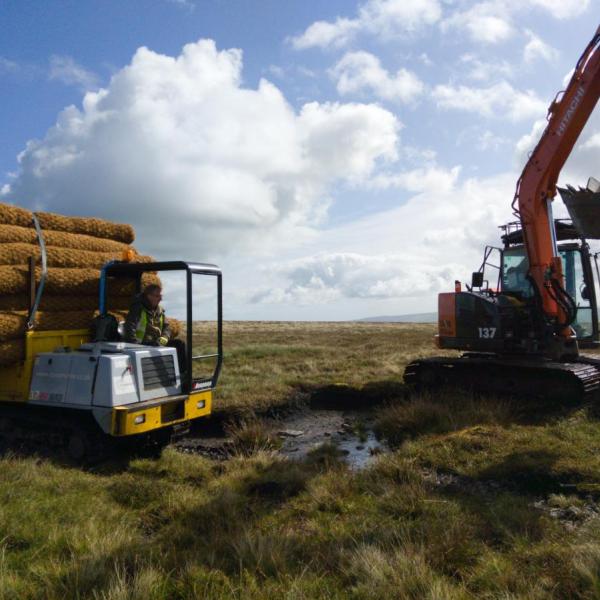
Central to restoration success is the restoration of hydrology and the re-establishment of native vegetation, particularly sphagnum mosses, which are essential for peat formation and water retention. Restoration methods include blocking drainage ditches, re-profiling eroded peat surfaces, and reintroducing key plant species. Full details of current restoration techniques can be provided on request. The Forest of Bowland National Landscape team has worked in partnership with local landowners to undertake 1812ha of restoration since 2010 (1088ha since 2019), with still more delivered directly by landowners through agri-environment schemes. Collaboration with partners in the Great North Bog coalition is increasingly unlocking new funding and allowing for sharing of ideas and resources. Looking ahead, priorities include restoring a further 8000ha by 2050, focusing largely on Bowland's upland peatlands.
Increasing interest in peatland restoration may unlock green finance initiatives and private investment, potentially through carbon markets, which could support our ambitions to increase the rate and scale of peatland restoration work in Bowland.