The Forest of Bowland Nature Recovery Plan and the nature recovery strategies of Lancashire and North Yorkshire have identified key or ‘Champion Species’ which require special measures to be taken to ensure their continued presence within the National Landscape. These are rare or threatened species of local and/or national significance, charismatic species that are distinctive and provide inspiration for people to care about nature, and indicator species that can show that an ecosystem or habitat is healthy.
The 14 species chosen for Bowland, following stakeholder engagement, represent the full range of species found throughout the National Landscape. Actions taken to conserve them will automatically benefit a wider range of species by safeguarding and extending habitats and ensuring management plans are delivered. Measures listed here are general; more specific actions are detailed in the Forest of Bowland Nature Recovery Plan here.
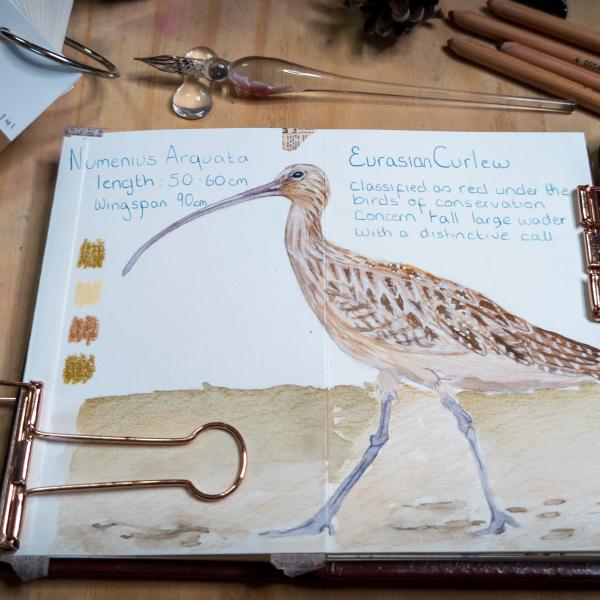
- Eurasian curlew (Numenius arquata)
- Hen harrier (Circus cyaneus)
- Black grouse (Lyrurus tetrix)
- Swift (Apus apus)
- Pied flycatcher (Ficedula hypoleuca)
- Juniper (Juniperus)
- Globeflower (Trollius europaeus) and associated Chiastocheta flies
- Hard-fern (Blechnum spicant)
- Ballerina waxcap (Porpolomopsis calyptriformis)
- Brown long-eared bat (Plecotus auratu)
- Brown trout (Salmo trutta)
- Yellow May dun (Heptagenia sulphurea)
- Bilberry bumblebee (Bombus monticola)
- Green hairstreak butterfly (Callophrys rubi)
12 of these species (all but Hard fern and Yellow May dun) are either S41 species on the IUCN Red list or species on the UK Birds of Conservation Concern Red list or are a nationally or locally rare or threatened species. The Black Grouse is known to have bred in Bowland in 2023 and 2024, and in 2019 the Fells were identified as an area to promote expansion within, due to the proximity of lecking (breeding) sites to the east of the National Landscape.